You know that moment when the wave starts... your chest gets tight in the middle of chem, or your brain starts its 11pm replay of something you said at lunch.
And instead of spiraling for the next three hours? You notice it. You pick a strategy. Ten minutes later you're back to texting your friend about the new episode like nothing happened. (Okay, almost nothing. But you handled it.)
That's what coping skills are supposed to feel like.
So if you've been doing the breathing, the journaling, the cold water... and you're still thinking "these literally don't work for me"... I want you to hear this: it's way more fixable than it feels right now. Usually it's not you and it's not even the strategy. It's how you're using it.
Here are the 4 reasons I see most often with the teens and young adults I work with, plus what to do instead.
Prefer to watch? The video above walks through all four. Prefer to read? Keep scrolling 👇
First: What Are Coping Skills Actually Supposed to Do?
Coping skills are the strategies that help you hang in there through the intensity of an uncomfortable or difficult emotion.
Here's the part nobody tells you: they aren't meant to solve the problem. They don't even necessarily change the situation. They won't make the test disappear or undo the fight with your best friend.
What they can change is the way you think, feel, and experience that moment... so you get to make healthier choices based on what you know will help, instead of letting your emotions lead the way.
A lot of the strategies I teach come from the Distress Tolerance part of Dialectical Behavior Therapy (DBT): getting yourself to the next moment without adding a second problem on top of the first one. My work is DBT-informed, and this is one of the first ideas I share because it changes how you measure "working."
(New to all of this? Start here: What Are Coping Skills?)
4 Reasons Your Coping Skills Aren't Working
Reason #1: Your Definition of "Working" Is Too Big
If "working" means the feeling is gone, every strategy is going to feel like a fail.
Try redefining it. After you use a strategy, check in:
Did it get a little better?
Did it stay the same (and not get worse)?
Did it get worse?
Do I need to try something different?
"It didn't get worse" counts. Seriously. That's a win, and it's information you can use next time.
(I break down a simple 3-step check-in here: How to Tell if Coping Skills Are Working)
Reason #2: The Emotions Are Coming Back-to-Back
How often are the big feelings showing up?
If you're getting hit again before you've recovered from the last wave (the group chat drama, then a bad grade, then a fight at home, all before dinner), one strategy isn't going to carry you through all of it.
That's your cue to mix things up. Have a few different kinds of strategies ready, not five versions of the same one. Something for your body, something for your thoughts, something that gets you out of your head and into the room.
And if the waves are coming so often that you never really get to recover? That might be a sign you need something stronger than coping skills on their own. Talking to a therapist, or even a medication prescriber, about what other support could help is a really solid move. (Not a failure. A next step.)
Reason #3: The Strategy Doesn't Match the Intensity
Use a 0–10 check-in scale:
0 = calm, cool, totally neutral
10 = the most intense, uncomfortable you've ever felt
Check your number before, during, and after you use a strategy.
Here's why this matters: journaling might be perfect at a 4. At an 8? Your brain is not about to write a reflective paragraph. Higher numbers usually need strategies that work through your body first. (This is exactly where TIPP skills come in.)
If your strategy isn't moving the number, it might just be the wrong match for that level.
Reason #4: You're Not Planning for How Long the Feeling Lasts
Some people move through emotions fast. One strategy, and they're onto the next moment.
Others feel things for a long time. If that's you, you may need to line up a few strategies back-to-back to fill the whole stretch. That's not failing. That's knowing yourself.
What to Do When Coping Skills Don't Work
Quick recap you can screenshot:
✨ Redefine "working." Better or not-worse both count.
✨ Check your number (0–10) before, during, and after.
✨ Match the strategy to the intensity. Body-first for the big numbers.
✨ Stack strategies when feelings come fast or last long.
✨ Keep a list of several strategies ready to go, for different situations, so you're never starting from zero.
✨ Plan it before you need it. Figuring out what to do during an 8 is so much harder than deciding at a 2. That's what a coping ahead plan is for.
And if you've tried all of this and things still feel like too much most days, that's not a sign you're broken. It's a sign you deserve more support. A therapist, school counselor, or trusted adult is a really good place to start.
Want these on hand for next time? Save this pin 📌

Want to Know Exactly Which Strategies Work for You?
Knowing about coping skills and knowing which ones work for your brain are two really different things.
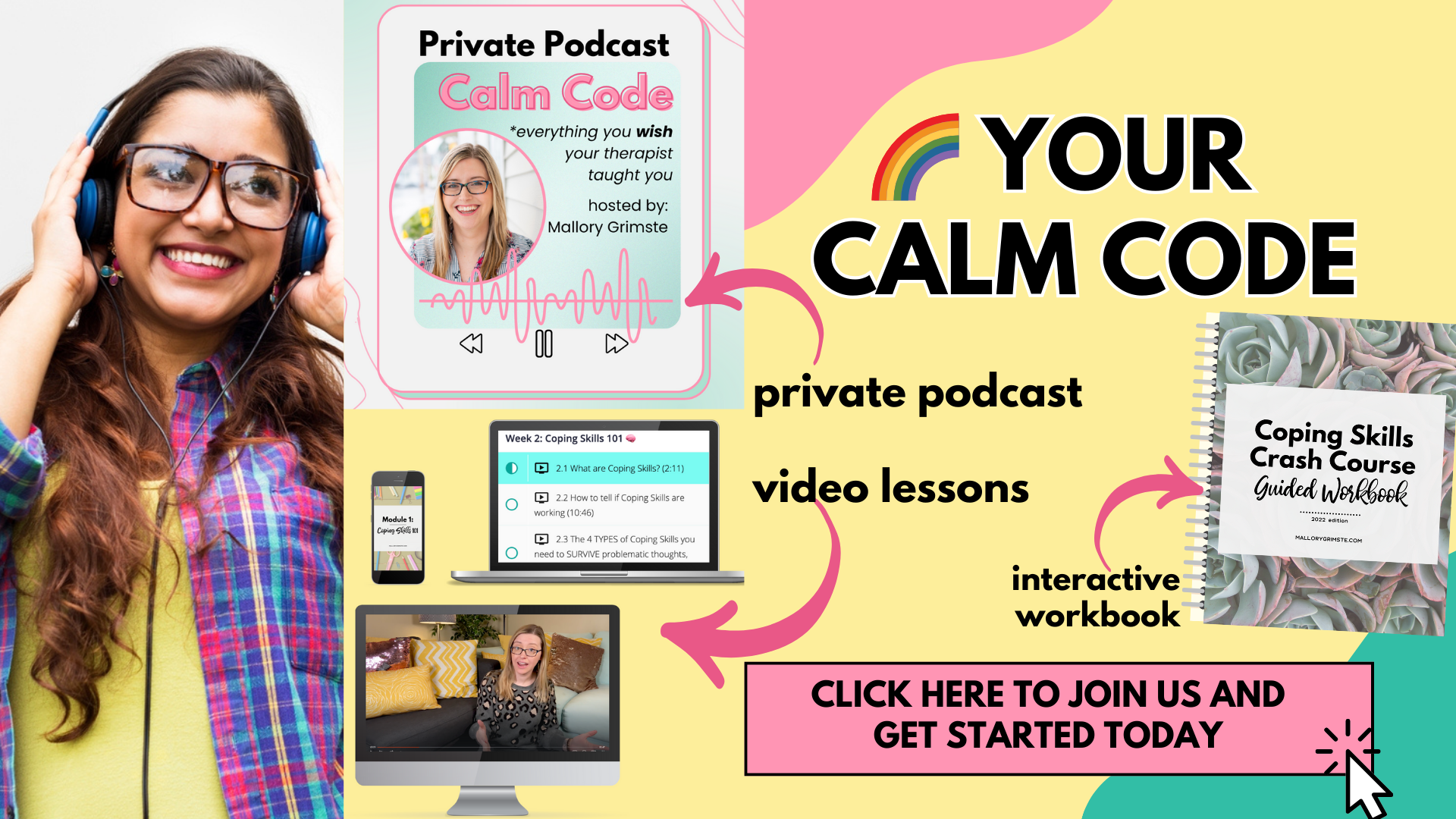
That's what Your Calm Code is for. It's my DBT-informed self-help program for teens and young adults, with videos, a workbook, and a private podcast, so you can figure out your go-to strategies at your own pace. Same stuff I teach in session, made for your life.