How Two Private Practice Therapists Got More Referrals in One Week (Without Insurance or Expensive Marketing)

Imagine a long-term client looks at you and says they think they're ready to wrap up — and your first thought is just warmth. Pure, uncomplicated happiness for them.
No mental math. No quiet background hum of who fills that spot. Just: good for them. Because you already know the next person is on their way.
That's what a referral plan actually makes possible. Not just a fuller calendar — a different relationship with the whole process. Most therapists in private practice want that and have no idea how to get there, because no one taught them the marketing side of building a sustainable caseload.
That's exactly what Stop the Referral Panic was built to fix.
Referral panic is that low-grade anxiety private practice therapists feel when their caseload starts to thin and there's no clear plan for what comes next. It's common. It's not talked about enough. And it's almost always solvable — with the right strategy and a little willingness to do the work.
And when two therapists recently took the workshop strategies into action during Do the Work Week — a short-form challenge built around actually doing the thing, not just watching it — what happened next was worth documenting.
What Is Stop the Referral Panic Workshop?
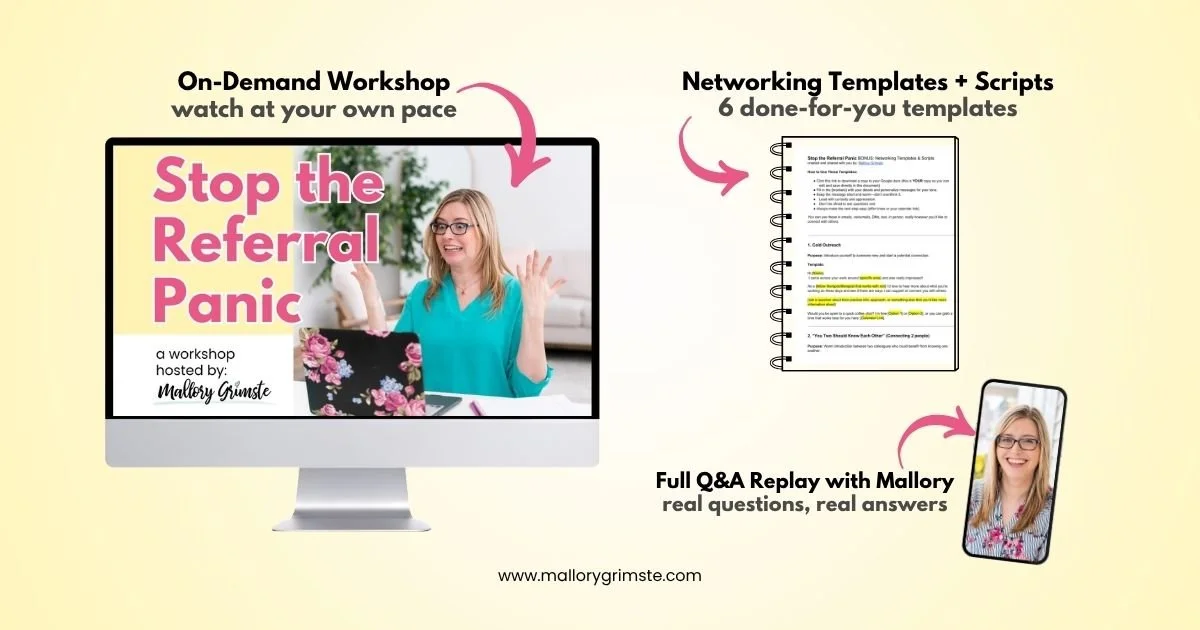
Stop the Referral Panic is an on-demand workshop for therapists in private practice who want a full caseload of aligned clients — without relying on insurance panels or expensive marketing. It's about two and a half hours total, broken into bite-sized lessons designed so you can implement as you go.
Inside, you'll learn how to get crystal clear on your ideal client, build a referral network through real relationships (with six done-for-you networking templates and scripts), create content that keeps working while you're in session, and pull it all into a simple repeatable plan that fits your actual schedule.
There's also a full Q&A replay and the Referral Success Resource Kit — every tool I actually use, tested and sorted so you can grab what fits and skip the rest.
“Do the Work Week: was a challenge layered on top of the workshop: take 2-3 strategies and do it. Not someday. That week.
Here's what two therapists did.
Alison Dagger, LCMHC, LCPC, LPC, LPMT, MT-BC — Your Tempo Healing
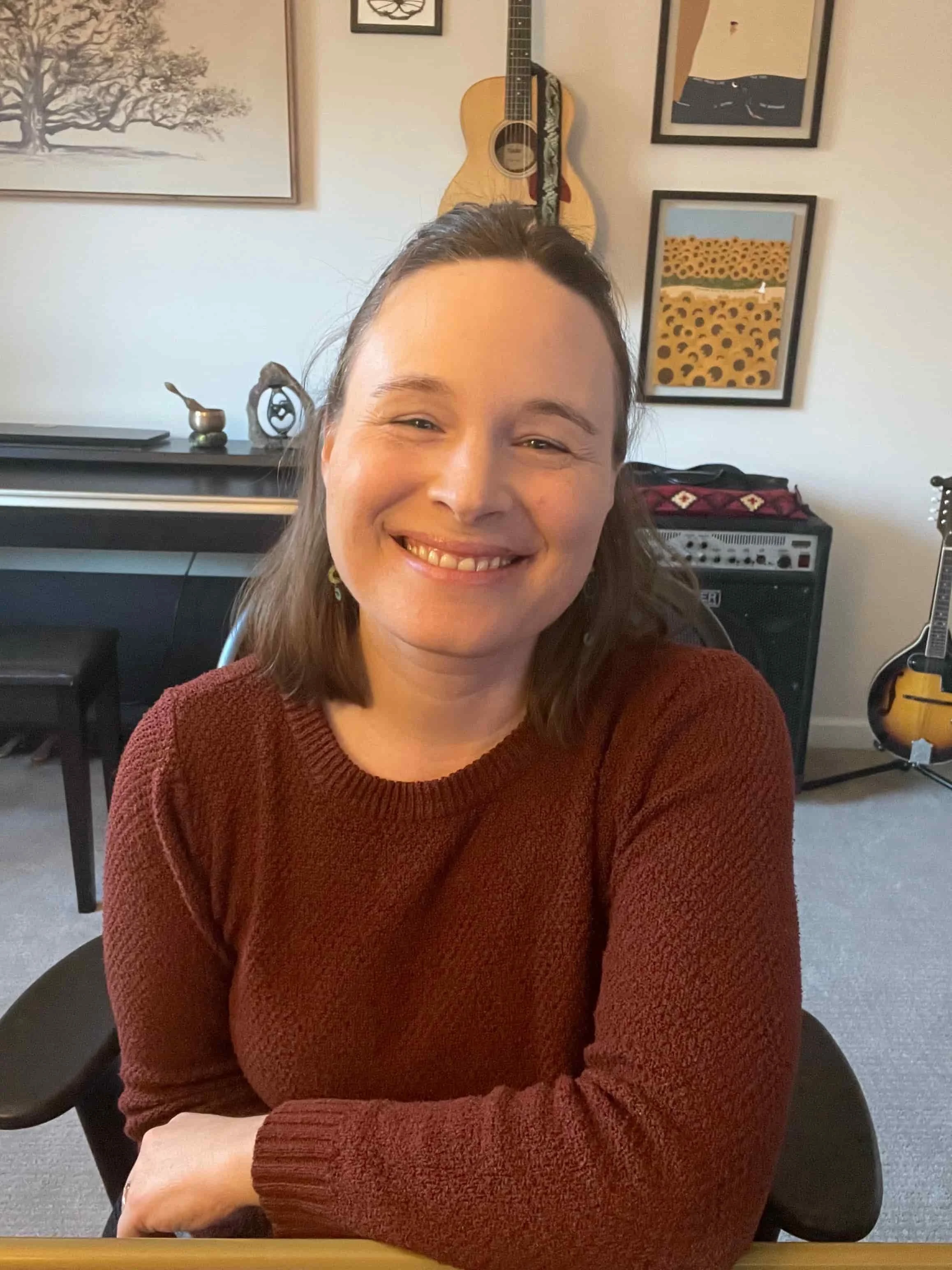
Alison is a trauma-responsive Music Psychotherapist who works with creatives, artists, and healers — people working through self-doubt, the internalized impacts of systemic oppression, C-PTSD, chronic anxiety, and the aftermath of sexual abuse. Her work at Your Tempo Healing integrates depth psychology and somatic processing in a way that's genuinely specialized.
She came into Do the Work Week with a specific goal: actually reach her networking targets. Not try to, not intend to — actually do it. She'd been carrying some nervousness around visibility, particularly around video content. Nothing that stopped her from doing her clinical work, but the kind of quiet resistance that makes the marketing side of practice feel heavier than it needs to.
During the challenge, Alison:
Contacted 4 new referral sources using a standardized networking email template from the workshop
Heard back from one of them and had a confident, grounded networking conversation
Built out backend systems to support her referral process going forward
Then she said this:
"I'm so proud of finally having a week where I reached my networking goals."
That's it. That's the whole shift. A therapist who had been circling the same task finally landing it — and feeling proud instead of depleted.
The piece she found most valuable was the AI content repurposing tip inside the workshop. By the end of the week, she felt noticeably more confident about video content and the visibility process overall.
Nicolle Wargo-Boswell — Pursuing Hope Counseling

Nicolle (she/her) runs Pursuing Hope Counseling, where she works with women who want to fully accept themselves and feel safe in their authentic identity. That specific, clear articulation of her niche? Something she got sharper on during the workshop.
Here's what makes her story stand out: Nicolle submitted her results one day after purchasing.
In those 24 hours, she:
Booked a meeting with The Wicked Press to explore pop-up events
Cold-emailed a holistic practice in a neighboring town to introduce herself
Made a plan to reconfigure her group room to host networking events for other therapists
One day. Three concrete actions. No waiting until it felt perfect.
But what shifted underneath all of it wasn't the action items — it was what drove them. Before the workshop, referrals and content creation had started to feel like a chore. Another obligation on an already full plate.
After:
"I honestly wish I did this sooner. It's gotten me excited to do the referral and content creation process again, because it had been feeling like such a chore."
That's what happens when you get clear on who you're for and where to find them. The whole process stops feeling like something you have to push through and starts feeling like something that makes sense.
If this is already clicking for you — you can get instant access to the Stop the Referral Panic workshop here.
New Addition to Stop the Referral Panic

Jules White: "Social Media is Optional" — Jules is an SEO and website expert who helps female business owners build visibility without relying on social media.
She runs The Website Success Hub and her approach centers on Google visibility and AI search — which is increasingly where clients are actually looking for therapists.
If the pressure to post everywhere has ever felt unsustainable, this bonus will feel like a genuine relief.
Can Private Practice Therapists Really Get Referrals Without Insurance?
Alison sent four emails. Heard back from one. Had one good conversation. And felt proud of herself — genuinely, specifically proud — for the first time in a while around her marketing.
Nicolle had three referral-building actions in motion within 24 hours of buying the workshop. She went from dreading this part of running her practice to feeling excited about it again.
Neither of them did anything revolutionary. They just stopped waiting and started moving.
The clients you want to work with are already out there, searching for someone exactly like you. The question is whether your practice is easy enough to find — and whether you have a plan that doesn't require you to hustle every single week to keep it that way.
Stop the Referral Panic walks you through building exactly that.
"I went from anxious about referrals to an 8 out of 10 confidence level." — Stephanie Donofrio, MS, LMFT
Frequently Asked Questions About Getting Referrals as a Private Practice Therapist
Does Stop the Referral Panic work if I'm still on insurance panels?
Yes. The referral-building and visibility strategies inside the workshop work whether you're in-network, out-of-network, or somewhere in between. Building real referral relationships and staying findable online isn't dependent on how you get paid — it's about helping the right clients find you. If your goal is to leave insurance panels entirely, that's a separate journey covered in Breaking Up With Insurance.
How quickly can therapists see results from these referral strategies?
Nicolle had three referral-building actions in motion within one day of purchasing. Alison met her networking goals for the first time in the same week she completed the challenge. Results depend on what you do with what you learn — but the strategies are designed to be implemented immediately, not someday.
Is Stop the Referral Panic only for therapists in private practice?
It's built with private practice therapists in mind, but the core skills — ideal client clarity, referral relationship building, findable content — are relevant to any therapist looking to grow a caseload on their own terms.
What kind of referral strategies does the workshop cover?
The workshop covers four main areas: getting clear on your ideal client so the right people recognize themselves immediately, building a referral network through real relationships using done-for-you networking templates, creating content that keeps working while you're in session, and pulling it all into a simple repeatable plan. No cold pitching, no paid ads, no posting every day.
How is this different from other private practice marketing programs?
Most marketing programs teach general business strategy that doesn't account for the specific ethical and relational nature of therapy work. Stop the Referral Panic was built by a therapist, for therapists — with zero fake urgency, zero pain-point tactics, and zero advice that would feel off-brand for a clinician. The strategies are low-cost, sustainable, and designed to fit around a full caseload, not require one you don't have yet.
👉 Learn more and get instant access to the Stop the Referral Panic workshop here.
💛 Mallory
Save this for later 📌